South Asia: a phrase inside a framework
In a Hindustani instrumental performance, an opening alap may develop without a regular drum cycle. Listen to how the musician approaches a note, lingers, and moves away. A raga is not simply a scale: characteristic phrases, important pitches, ornament and conventions of development help establish its identity. Particular associations with time or season can matter, although practice and presentation vary.
When a metered section begins, tabla may articulate a tala, or recurring rhythmic cycle. The return to sam, the first beat of the cycle, can become a point of anticipation shared by performers and attentive listeners. Counting is helpful, but the expressive interaction matters more than passing a theoretical test. Notice a musician delaying, compressing or reshaping a phrase before the landing.
Hindustani music is practiced across North India, Pakistan and wider diasporas. Carnatic music, strongly associated with South India, has its own extensive approaches to composition, improvisation, raga and tala. Neither category describes every music in those regions. Folk, devotional, film, popular and community-specific practices coexist and overlap, often through the same musicians and audiences.
Indonesia: hearing a collective pattern
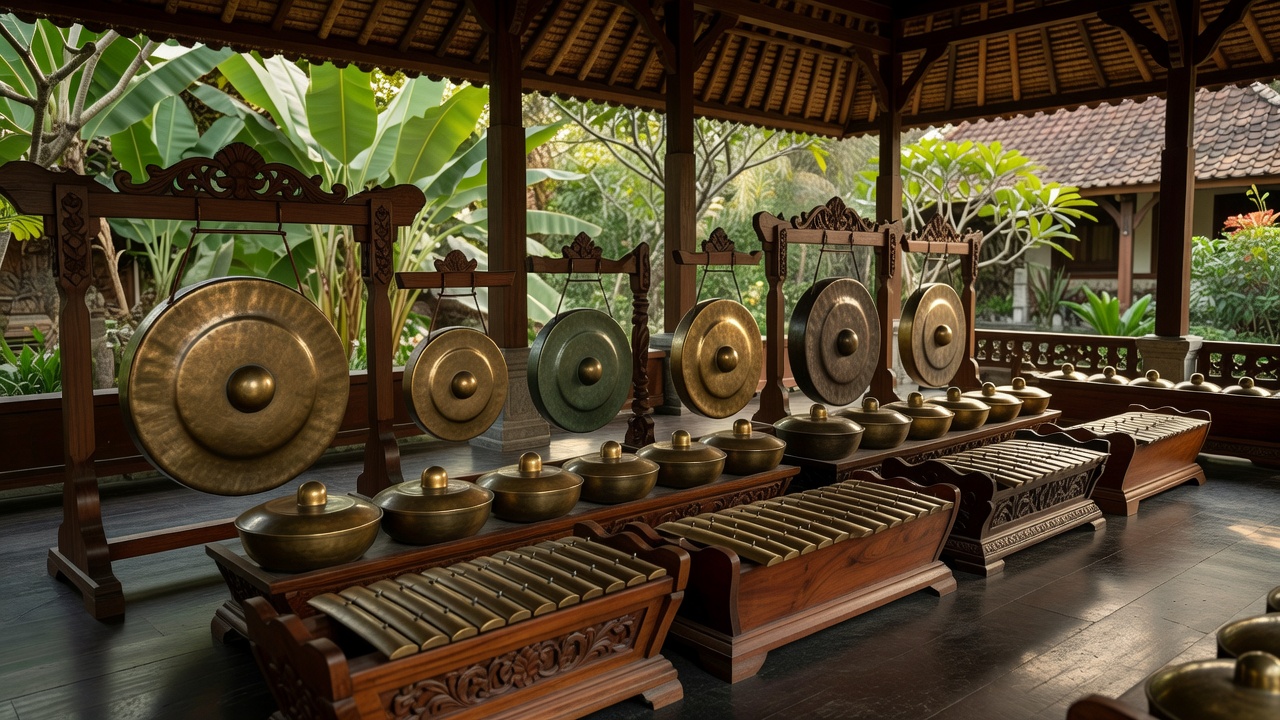
The word gamelan often names an ensemble as well as a musical practice. In Central Javanese traditions, listeners may hear a relatively spare core melody elaborated across different instrumental layers, with gongs marking larger structural divisions. Changes in density and pace need not work like a Western pop song's verse-to-chorus shift. Try following one recurring gong before tracing the smaller movements around it.
Balinese gamelan practices are diverse. In gong kebyar, sudden dynamic changes and tightly coordinated gestures can be especially striking. Kotekan refers to interlocking patterns in which complementary parts produce a composite texture. It should not be treated as a label for every fast passage or every Indonesian ensemble. An ensemble's tuning, instrument construction and local repertoire shape its identity.
Music may accompany dance, theatre, religious occasions, competitions or concerts. Those settings affect what a performance is doing, not only how it sounds. A concert recording can offer a rich encounter while still removing the social sequence, movement and responsibilities of the original occasion.
Korea and Japan: voice, breath and transmission
Korean pansori centers on an extended musical narrative delivered by a singer with a drummer. Vocal color, speech-like passages and dramatic characterization work together; the drummer's responses and audience encouragement are part of the event. Listen for the relationship between storytelling pace and rhythmic momentum rather than expecting a continuous melody in the style of a short studio song.
Japanese shakuhachi practice offers a different entry point: the changing edge of a sustained tone. In honkyoku repertoires associated with historical komuso practice, breath, timing and tonal shading can carry structural importance. Today's shakuhachi musicians also work in ensemble music, contemporary composition and improvisation. Calling the instrument “meditation music” alone erases much of that range.
Iran and Central Asia: remembering a melodic world
The Iranian radif is a transmitted repertoire of melodic material organized within a modal framework. Musicians study it as a foundation for interpretation and creative development. The relationship between remembered models and a particular performance is more revealing than a simple opposition between fixed composition and free improvisation. Tar, setar, kamancheh and voice offer different ways into this practice.
Shashmaqom, associated particularly with musical centers including Bukhara and Samarkand, brings together instrumental and vocal traditions shaped by Persian- and Turkic-language cultural exchange. It has important histories in both Uzbekistan and Tajikistan. Modern national borders are therefore an incomplete guide to the movement of repertoire, poetry and teaching lineages.
Listen for setting, not a national essence
For your next recording, identify the named tradition, performers, instruments and occasion before comparing it with another performance. Ask whether the music is a complete work, a concert excerpt, a teaching demonstration or an arrangement. Each can be valuable, but they answer different questions. These examples leave many regions and traditions unaddressed; the omissions are a limit of this introduction, not a statement about importance.
Further context
- UNESCO: Wayang puppet theatre — context for an Indonesian performance tradition in which music, theatre and narrative meet.
- UNESCO: Pansori epic chant — an introduction to the Korean narrative performance practice.
- UNESCO: Radif of Iranian music — transmission and repertoire.
- UNESCO: Shashmaqom music — a shared Central Asian heritage.